
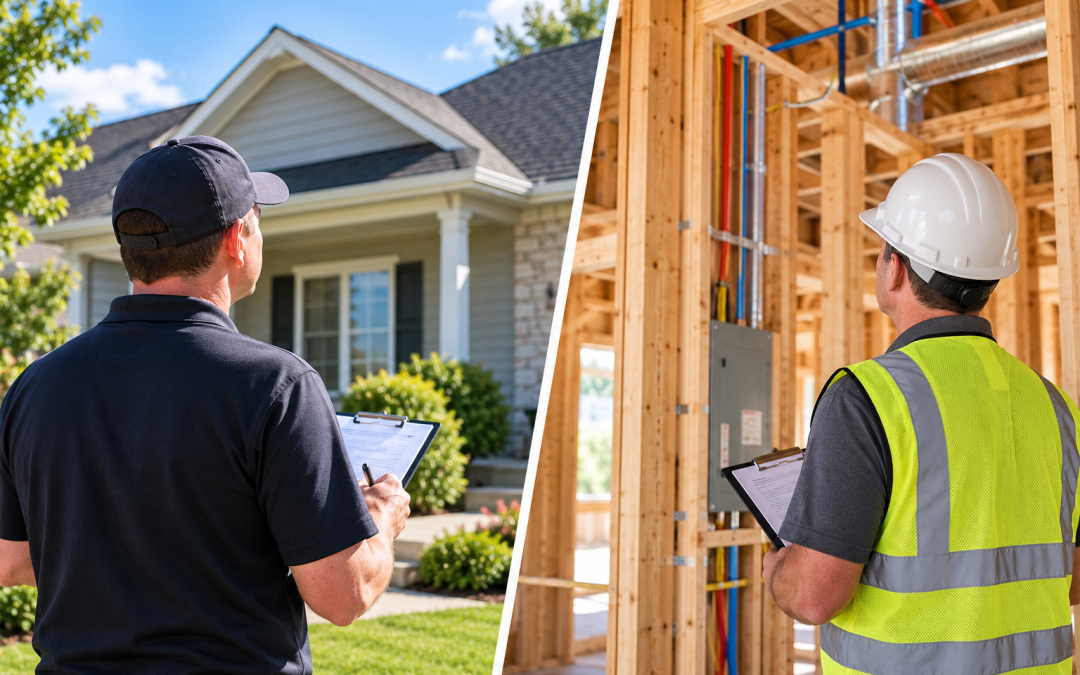
Quick Answer: A home inspection looks at the visible condition of a home and its major systems, while a code inspection checks whether certain construction or repair work follows building rules. A home inspector may report unsafe or unusual conditions, but a standard home inspection is not a full code-compliance review.
What Is the Main Difference?
A home inspection focuses on the property’s current condition. A code inspection focuses on whether certain construction or repair work meets the rules that apply to that project.
| Home Inspection | Code Inspection |
|---|---|
| Looks at the home’s current visible condition | Checks compliance with applicable building rules |
| Often used by buyers and property owners | Often connected to permits, construction, or remodeling |
| Reviews major systems and accessible components | Reviews specific work or stages of construction |
| Does not certify full code compliance | Focuses on code requirements |
The two inspections may notice some of the same concerns, but they serve different purposes.
What Does a Home Inspector Look For?
A home inspector looks for visible problems that may affect safety, function, or condition. This can include leaks, roof damage, electrical concerns, plumbing problems, moisture, structural movement, HVAC issues, or damaged materials.
Five Star Home Inspection Group brings more than 40 years of construction experience to inspections. That background can help buyers understand when an older feature is simply dated and when a visible condition may point to a safety, function, or repair concern.
Does a Home Inspector Check Building Codes?
Not in the same way a code inspector does. A home inspector may notice something that looks unsafe, poorly installed, or unusual and report it, but that does not mean the inspector is deciding whether the home passes or fails a specific code.
Building rules change over time, so older homes may have features that were allowed when they were built but would be handled differently today.
What Is a Code Inspection?
A code inspection is usually connected to construction, remodeling, permits, or repairs. A code inspector may review framing, electrical work, plumbing, mechanical systems, or other parts of a project to see whether they meet applicable requirements.
This type of inspection is usually tied to the work being completed, not to the overall condition of the property for a buyer.
Can a Home Pass a Code Inspection and Still Have Problems?
Yes. Materials can wear out, systems can fail, and changes can happen after construction.
A home may have passed a permit or code inspection years ago and still develop roof leaks, electrical problems, plumbing failures, moisture damage, or other concerns later. A home inspection looks at the property as it is on the day of the inspection.
Can a Home Inspector Find Unsafe Conditions?
Yes. A home inspector can report visible concerns such as damaged electrical parts, unsafe stairs, moisture damage, structural problems, or other conditions that may need repair or further evaluation.
The inspector can explain why a condition matters without turning the inspection into a full code review.
What If the Home Was Recently Remodeled?
A remodeled home can have both new and older systems. If major electrical, plumbing, roofing, structural, or HVAC work was completed, buyers may want to review available permits, contractor records, or warranties.
Those documents can provide useful background, but they do not replace an independent home inspection.
Why Does This Matter for Buyers?
A home that passed a construction or permit inspection is not automatically problem-free.
The code inspection may have focused on specific work at a specific time. A buyer’s home inspection looks at the current visible condition of the property and can identify issues that developed later or were outside the scope of the original inspection.
Frequently Asked Questions
Is a Home Inspector the Same as a Building Inspector?
No. A home inspector usually works for the buyer or property owner and checks the visible condition of the home. A building or code inspector usually works as part of a permit or construction process.
Does a Home Inspection Tell Me If My House Is Up to Code?
No. A home inspection focuses on property condition, not whether the entire home meets current building codes.
Should I Skip a Home Inspection If the House Passed a Code Inspection?
No. The two inspections serve different purposes, and problems can develop after construction or repairs are completed.
Can a Home Be Safe Even If It Does Not Meet Every Current Code?
Yes. Older homes may have features that do not match today’s building standards but are not automatically unsafe. The inspector focuses on the actual condition, safety, and function of what is visible.
Can Older Homes Have Features That Do Not Meet Current Codes?
Yes. Building standards change over time. An older feature may not match today’s rules, but the inspector will focus on whether it creates a safety, function, or condition concern.
Schedule a Home Inspection in Central Indiana
Five Star Home Inspection Group provides professional home inspections throughout Muncie and Central Indiana. If you are buying a home, schedule an inspection to better understand the property’s current visible condition and major systems.